Loading...
Searching...
No Matches
◆ lwmpoint_clip_to_ordinate_range()
|
inlinestatic |
Clip an input MULTIPOINT between two values, on any ordinate input.
Definition at line 404 of file lwlinearreferencing.c.
405{
406 LWCOLLECTION *lwgeom_out = NULL;
407 char hasz, hasm;
408 uint32_t i;
409
410 /* Read Z/M info */
413
414 /* Prepare return object */
416
417 /* For each point, is its ordinate value between from and to? */
419 {
420 POINT4D p4d;
421 double ordinate_value;
422
424 ordinate_value = lwpoint_get_ordinate(&p4d, ordinate);
425
426 if (from <= ordinate_value && to >= ordinate_value)
427 {
430 }
431 }
432
433 /* Set the bbox, if necessary */
436
437 return lwgeom_out;
438}
void lwgeom_refresh_bbox(LWGEOM *lwgeom)
Drop current bbox and calculate a fresh one.
Definition lwgeom.c:689
int lwpoint_getPoint4d_p(const LWPOINT *point, POINT4D *out)
Definition lwpoint.c:57
int lwgeom_has_z(const LWGEOM *geom)
Return LW_TRUE if geometry has Z ordinates.
Definition lwgeom.c:916
LWCOLLECTION * lwcollection_construct_empty(uint8_t type, int32_t srid, char hasz, char hasm)
Definition lwcollection.c:92
LWCOLLECTION * lwcollection_add_lwgeom(LWCOLLECTION *col, const LWGEOM *geom)
Appends geom to the collection managed by col.
Definition lwcollection.c:188
int lwgeom_has_m(const LWGEOM *geom)
Return LW_TRUE if geometry has M ordinates.
Definition lwgeom.c:923
double lwpoint_get_ordinate(const POINT4D *p, char ordinate)
Given a POINT4D and an ordinate number, return the value of the ordinate.
Definition lwlinearreferencing.c:255
Definition liblwgeom.h:559
Definition liblwgeom.h:443
Definition liblwgeom.h:455
Definition liblwgeom.h:399
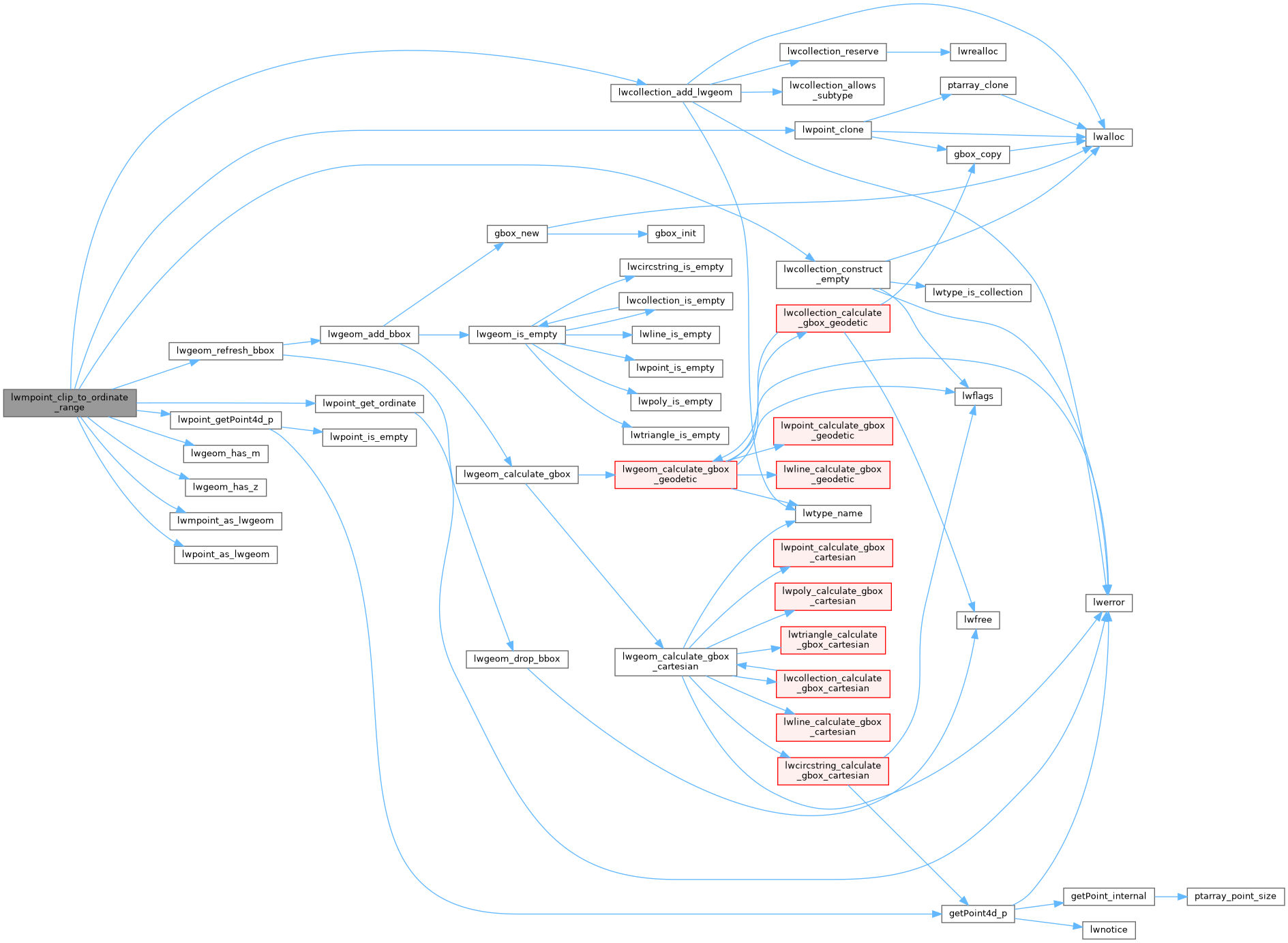
References LWMPOINT::bbox, LWMPOINT::geoms, lwcollection_add_lwgeom(), lwcollection_construct_empty(), lwgeom_has_m(), lwgeom_has_z(), lwgeom_refresh_bbox(), lwmpoint_as_lwgeom(), lwpoint_as_lwgeom(), lwpoint_clone(), lwpoint_get_ordinate(), lwpoint_getPoint4d_p(), MULTIPOINTTYPE, LWMPOINT::ngeoms, and LWMPOINT::srid.
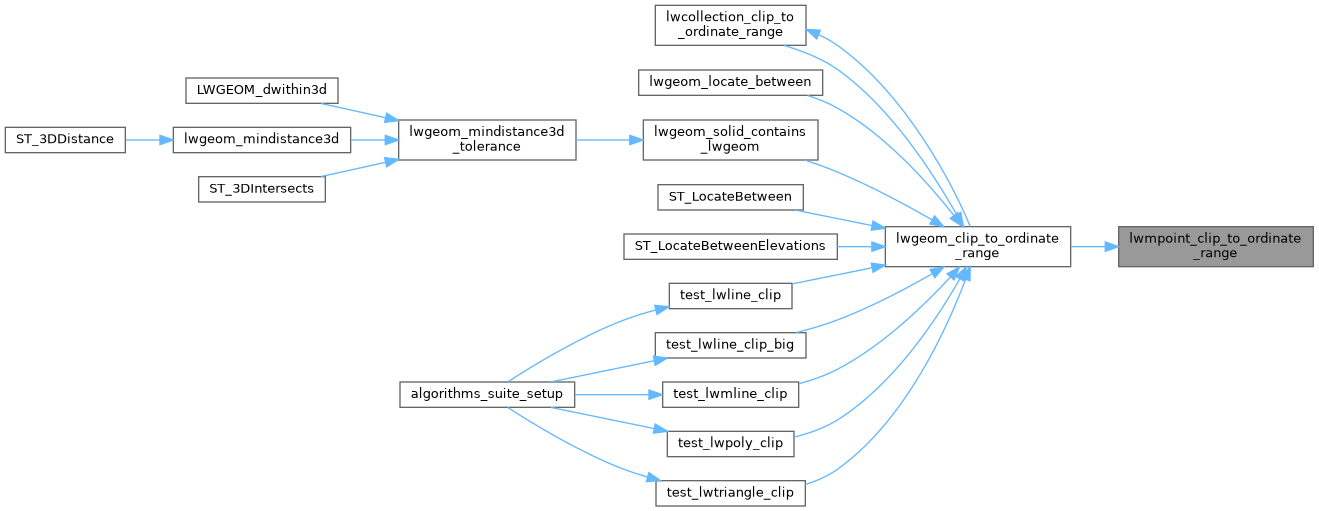
Referenced by lwgeom_clip_to_ordinate_range().
Here is the call graph for this function:
Here is the caller graph for this function: