Namn
ST_HexagonGrid — Returnerar en uppsättning hexagoner och cellindex som helt täcker gränserna för geometriargumentet.
Synopsis
setof record ST_HexagonGrid(float8 size, geometry bounds);
Beskrivning
Utgår från konceptet med en hexagonindelning av planet. (Inte en hexagonindelning av jordklotet; använd tillägget h3-pg för H3.) För ett givet plant SRS och en given kantlängd finns, med start i SRS:ets origo, en unik hexagonindelning av planet, Tiling(SRS, Size). Funktionen besvarar frågan vilka hexagoner i en given Tiling(SRS, Size) som överlappar en given begränsning.
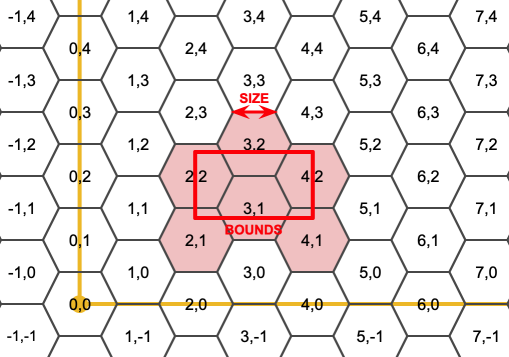
SRS för utdatahexagonerna är den SRS som tillhandahålls av begränsningsgeometrin.
Om man dubblar eller tripplar hexagonens kantstorlek genereras en ny parent tiling som passar med origin tilingen. Tyvärr är det inte möjligt att generera överordnade hexagonbeläggningar som barnbeläggningarna passar perfekt i.
Tillgänglighet: 3.1.0
Exempel
Enhetshexagoner som täcker rektangulära gränser.
WITH bounds AS (
    SELECT ST_MakeEnvelope(2, 1, 4, 3, 3857) AS geom
), grid AS (
    SELECT hex.*
    FROM bounds
    CROSS JOIN LATERAL ST_HexagonGrid(1, geom) AS hex
)
SELECT (SELECT geom FROM bounds) AS input_bounds,
    ST_Collect(geom ORDER BY i, j) AS grid
FROM grid;
POLYGON((2 1,2 3,4 3,4 1,2 1)) | MULTIPOLYGON(((0.5 0.866,1 0,2 0,2.5 0.866,2 1.732,1 1.732,0.5 0.866)),((0.5 2.598,1 1.732,2 1.732,2.5 2.598,2 3.464,1 3.464,0.5 2.598)),((2 1.732,2.5 0.866,3.5 0.866,4 1.732,3.5 2.598,2.5 2.598,2 1.732)),((2 3.464,2.5 2.598,3.5 2.598,4 3.464,3.5 4.33,2.5 4.33,2 3.464)),((3.5 0.866,4 0,5 0,5.5 0.866,5 1.732,4 1.732,3.5 0.866)),((3.5 2.598,4 1.732,5 1.732,5.5 2.598,5 3.464,4 3.464,3.5 2.598)))
Underordnade rutor som skär en överordnad hexagon med dubbel storlek delar indelningens origo, men ryms inte perfekt inuti den överordnade hexagonen.
WITH parent AS (
    SELECT ST_Hexagon(2, 0, 0) AS geom
), children AS (
    SELECT child.*
    FROM parent
    CROSS JOIN LATERAL ST_HexagonGrid(1, geom) AS child
    WHERE ST_Area(ST_Intersection(child.geom, parent.geom)) > 0
)
SELECT ST_Collect(geom ORDER BY i, j) AS children,
    (SELECT geom FROM parent) AS parent
FROM children;
MULTIPOLYGON(((-2.5 -0.866,-2 -1.732,-1 -1.732,-0.5 -0.866,-1 0,-2 0,-2.5 -0.866)),((-2.5 0.866,-2 0,-1 0,-0.5 0.866,-1 1.732,-2 1.732,-2.5 0.866)),((-1 -1.732,-0.5 -2.598,0.5 -2.598,1 -1.732,0.5 -0.866,-0.5 -0.866,-1 -1.732)),((-1 0,-0.5 -0.866,0.5 -0.866,1 0,0.5 0.866,-0.5 0.866,-1 0)),((-1 1.732,-0.5 0.866,0.5 0.866,1 1.732,0.5 2.598,-0.5 2.598,-1 1.732)),((0.5 -0.866,1 -1.732,2 -1.732,2.5 -0.866,2 0,1 0,0.5 -0.866)),((0.5 0.866,1 0,2 0,2.5 0.866,2 1.732,1 1.732,0.5 0.866))) | POLYGON((-2 0,-1 -1.732,1 -1.732,2 0,1 1.732,-1 1.732,-2 0))
Räkna punkter i hexagoner.
För att göra en punktsammanfattning mot ett hexagonalt rutnät genererar du ett hexagonalt rutnät med punkternas utsträckning som gränser och ansluter sedan spatialt till det rutnätet.
SELECT COUNT(*), hexes.geom
FROM ST_HexagonGrid(
  10000,
  ST_SetSRID(ST_EstimatedExtent('pointtable', 'geom'), 3857)
) AS hexes
INNER JOIN pointtable AS pts
  ON ST_Intersects(pts.geom, hexes.geom)
GROUP BY hexes.geom;
Generera hexagontäckning av polygoner.
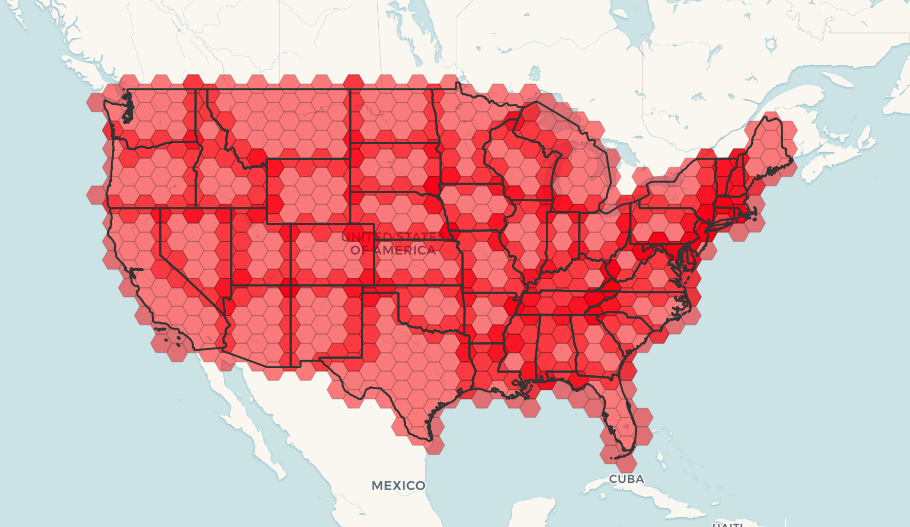
Om ett rutnät skapas för varje polygongräns och filtreras till skärande celler får angränsande regioner överlappande hexagoner längs sin gemensamma gräns. Figuren nedan använder två enkla regioner i stället för en extern tabell med administrativa gränser, så exemplet är självständigt.
WITH admin1(gid, geom) AS (
    VALUES
        (1, ST_MakeEnvelope(0, 0, 3, 3, 3857)),
        (2, ST_MakeEnvelope(3, 0, 6, 3, 3857))
), coverage AS (
    SELECT hex.i, hex.j, hex.geom
    FROM admin1
    CROSS JOIN LATERAL ST_HexagonGrid(1.5, admin1.geom) AS hex
    WHERE ST_Intersects(admin1.geom, hex.geom)
    GROUP BY hex.i, hex.j, hex.geom
), layers AS (
    SELECT 'region' AS kind, gid AS position, geom
    FROM admin1
    UNION ALL
    SELECT
        'hexagon',
        1000 + row_number() OVER (ORDER BY i, j),
        geom
    FROM coverage
)
SELECT
    CASE kind WHEN 'region' THEN geom END AS input_region,
    CASE kind WHEN 'hexagon' THEN geom END AS hexagon
FROM layers
ORDER BY position;
POLYGON((0 0,0 3,3 3,3 0,0 0)) | null
POLYGON((3 0,3 3,6 3,6 0,3 0)) | null
null | POLYGON((-1.5 0,-0.75 -1.3,0.75 -1.3,1.5 0,0.75 1.3,-0.75 1.3,-1.5 0))
null | POLYGON((-1.5 2.6,-0.75 1.3,0.75 1.3,1.5 2.6,0.75 3.9,-0.75 3.9,-1.5 2.6))
null | POLYGON((0.75 1.3,1.5 0,3 0,3.75 1.3,3 2.6,1.5 2.6,0.75 1.3))
null | POLYGON((0.75 3.9,1.5 2.6,3 2.6,3.75 3.9,3 5.2,1.5 5.2,0.75 3.9))
null | POLYGON((3 0,3.75 -1.3,5.25 -1.3,6 0,5.25 1.3,3.75 1.3,3 0))
null | POLYGON((3 2.6,3.75 1.3,5.25 1.3,6 2.6,5.25 3.9,3.75 3.9,3 2.6))
null | POLYGON((5.25 1.3,6 0,7.5 0,8.25 1.3,7.5 2.6,6 2.6,5.25 1.3))
null | POLYGON((5.25 3.9,6 2.6,7.5 2.6,8.25 3.9,7.5 5.2,6 5.2,5.25 3.9))
Samma mönster gäller för en verklig tabell med administrativa gränser:
![[Notera]](../images/note.png)
|
|
|
Nyckelordet LATERAL är underförstått för mängdreturnerande funktioner som hänvisar till en tidigare tabell i FROM-listan. För detta exempel är CROSS JOIN LATERAL, CROSS JOIN och ett vanligt kommatecken likvärdiga konstruktioner. |
SELECT admin1.gid, hex.geom
FROM
    admin1
    CROSS JOIN
    ST_HexagonGrid(100000, admin1.geom) AS hex
WHERE
    adm0_a3 = 'USA'
    AND
    ST_Intersects(admin1.geom, hex.geom)
Se även
ST_EstimatedExtent, ST_SetSRID, ST_SquareGrid, ST_TileEnvelope