Loading...
Searching...
No Matches
◆ lwcurvepoly_add_ring()
|
extern |
Add a ring, allocating extra space if necessary.
The curvepolygon takes ownership of the passed point array.
Definition at line 71 of file lwcurvepoly.c.
72{
73 uint32_t i;
74
75 /* Can't do anything with NULLs */
76 if( ! poly || ! ring )
77 {
80 }
81
82 /* Check that we're not working with garbage */
84 {
88 }
89
90 /* Check that we're adding an allowed ring type */
91 if ( ! ( ring->type == LINETYPE || ring->type == CIRCSTRINGTYPE || ring->type == COMPOUNDTYPE ) )
92 {
95 }
96
97
98 /* In case this is a truly empty, make some initial space */
100 {
101 poly->maxrings = 2;
102 poly->nrings = 0;
104 }
105
106 /* Allocate more space if we need it */
108 {
109 poly->maxrings *= 2;
111 }
112
113 /* Make sure we don't already have a reference to this geom */
115 {
117 {
120 }
121 }
122
123 /* Add the ring and increment the ring count */
125 poly->nrings++;
127}
const char * lwtype_name(uint8_t type)
Return the type name string associated with a type number (e.g.
Definition lwutil.c:216
void void lwerror(const char *fmt,...) __attribute__((format(printf
Write a notice out to the error handler.
Definition liblwgeom.h:457
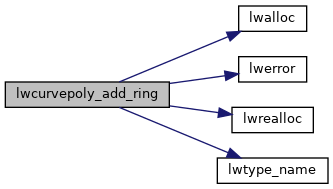
References CIRCSTRINGTYPE, COMPOUNDTYPE, LINETYPE, LW_FAILURE, LW_SUCCESS, lwalloc(), LWDEBUG, LWDEBUGF, lwerror(), lwrealloc(), lwtype_name(), LWCURVEPOLY::maxrings, LWCURVEPOLY::nrings, LWCURVEPOLY::rings, and LWGEOM::type.
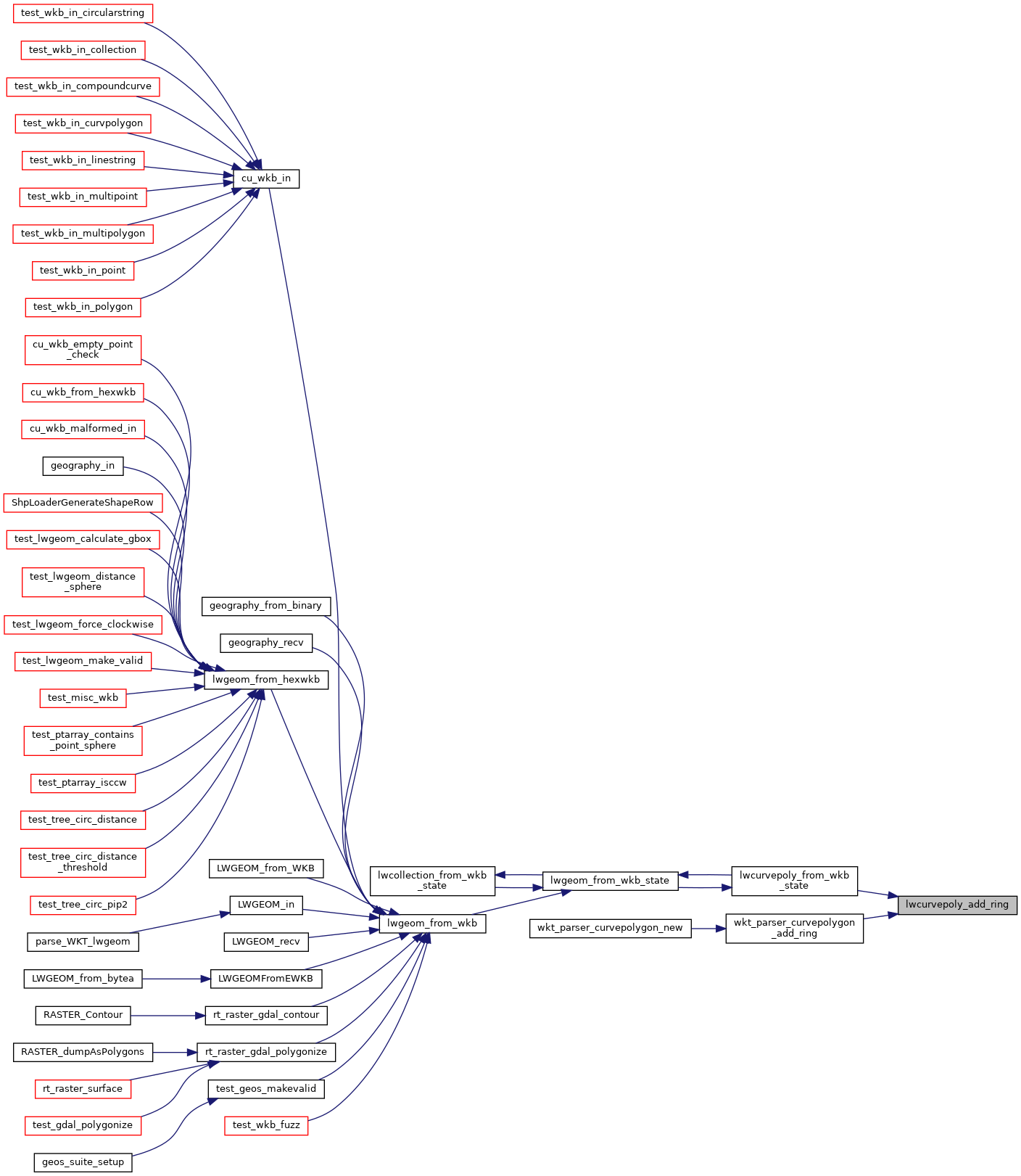
Referenced by lwcurvepoly_from_wkb_state(), and wkt_parser_curvepolygon_add_ring().
Here is the call graph for this function:
Here is the caller graph for this function: