Loading...
Searching...
No Matches
◆ relate_pattern()
| Datum relate_pattern | ( | PG_FUNCTION_ARGS | ) |
Definition at line 900 of file lwgeom_geos_predicates.c.
901{
902 SHARED_GSERIALIZED *shared_geom1 = ToastCacheGetGeometry(fcinfo, 0);
903 SHARED_GSERIALIZED *shared_geom2 = ToastCacheGetGeometry(fcinfo, 1);
906
907 /* Ensure DE9IM pattern is no more than 9 chars */
908 text *imPtr = DatumGetTextP(DirectFunctionCall2(text_left,
909 PG_GETARG_DATUM(2), Int32GetDatum(9)));
910 char *im = text_to_cstring(imPtr);
912 uint32_t i;
913#if POSTGIS_GEOS_VERSION >= 31300
914 PrepGeomCache *prep_cache;
915#endif
916
917 gserialized_error_if_srid_mismatch(geom1, geom2, __func__);
918
919 /*
920 ** Need to make sure 't' and 'f' are upper-case before handing to GEOS
921 */
922 for (i = 0; i < strlen(im); i++)
923 im[i] = toupper(im[i]);
924
925 initGEOS(lwpgnotice, lwgeom_geos_error);
926
927#if POSTGIS_GEOS_VERSION >= 31300
928 prep_cache = GetPrepGeomCache(fcinfo, shared_geom1, shared_geom2);
930 {
931 GEOSGeometry *g = NULL;
933 {
934 g = POSTGIS2GEOS(geom2);
935 }
936 else
937 {
938 g = POSTGIS2GEOS(geom1);
939 imInvert(im);
940 }
941
944 GEOSGeom_destroy(g);
945 }
946 else
947#endif
948 {
949 GEOSGeometry *g1, *g2;
950 g1 = POSTGIS2GEOS(geom1);
952 g2 = POSTGIS2GEOS(geom2);
953 if (!g2)
954 {
956 GEOSGeom_destroy(g1);
957 }
958 result = GEOSRelatePattern(g1, g2, im);
959 GEOSGeom_destroy(g1);
960 GEOSGeom_destroy(g2);
961 }
962
963 pfree(im);
965
966 PG_RETURN_BOOL(result);
967}
void gserialized_error_if_srid_mismatch(const GSERIALIZED *g1, const GSERIALIZED *g2, const char *funcname)
Definition gserialized.c:432
PrepGeomCache * GetPrepGeomCache(FunctionCallInfo fcinfo, SHARED_GSERIALIZED *g1, SHARED_GSERIALIZED *g2)
Given a couple potential geometries and a function call context, return a prepared structure for one ...
Definition lwgeom_geos_prepared.c:369
GEOSGeometry * POSTGIS2GEOS(const GSERIALIZED *pglwgeom)
Definition postgis/lwgeom_geos.c:1823
Definition liblwgeom.h:443
const GEOSPreparedGeometry * prepared_geom
Definition lwgeom_geos_prepared.h:54
Definition lwgeom_geos_prepared.h:50
References PrepGeomCache::gcache, GetPrepGeomCache(), gserialized_error_if_srid_mismatch(), HANDLE_GEOS_ERROR, lwgeom_geos_error(), POSTGIS2GEOS(), PrepGeomCache::prepared_geom, and result.
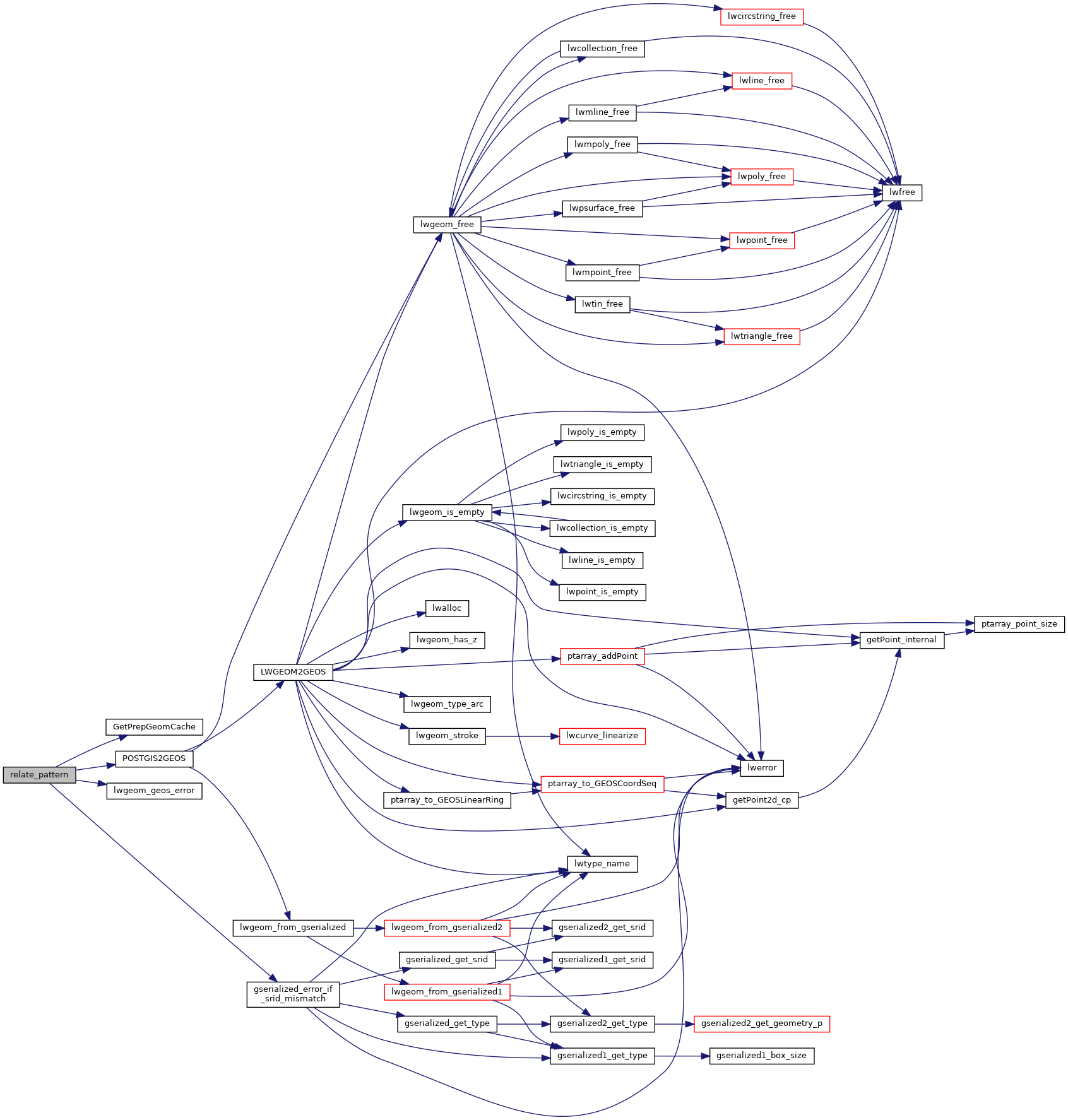
Here is the call graph for this function: